
Cosmetics take center stage in Made in Italy
"The Italian code" is a blog on Made in Italy and symbol-intensive industries, coordinated by Gabriella Lojacono.

When people talk about Made in Italy around the world, the mind almost automatically turns to fashion, design, food, and wine. Much less frequently, however, does it turn to cosmetics. And yet this is precisely where Italy has, almost quietly, built one of the most sophisticated, specialized, and competitive industrial ecosystems on a global scale. An ecosystem that does not simply produce cosmetics, but brings together research, manufacturing, packaging, raw materials, regulatory expertise, innovation, and service for international brands.
This is the real key to understanding the sector’s relevance: Italian cosmetics is not just a collection of companies producing on behalf of others, but a broad and integrated supply chain that, over time, has evolved into a platform of capabilities that is difficult to replace. From ingredient suppliers to manufacturers of make-up, skincare, haircare, and fragrances, all the way to primary and secondary packaging, what emerges is a cohesive, layered system capable of generating value far beyond the finished product.
Numbers and international relevance
The numbers help bring the scale of this phenomenon into focus. In 2025, the Italian cosmetics industry reached total revenues of €18 billion, up 2.9%, confirming a positive trajectory even in an international environment less buoyant than in the past. Exports reached €8.6 billion, growing by 4.1%, and now account for 48% of the sector’s total revenues. The trade balance remains strongly positive at €5.1 billion. Italy thus maintains its position as the world’s fifth-largest exporter, with a 5.6% share of the global market, behind France, the United States, Germany, and South Korea, all highly sophisticated markets. It is noteworthy that among the leading exporters, there are no countries typically competitive on cost, such as China, which instead excels in many other manufacturing sectors. This suggests that, in cosmetics, competitiveness is driven above all by advanced capabilities, innovation, quality, and the ability to manage complexity, rather than by dynamics.
And this is not growth driven solely by foreign markets: the domestic market also continues to show resilient demand, with purchases totaling €12.8 billion in 2025 and growth of 3.2%, supported in part by e-commerce, which continues to expand at a sustained pace.
But macro data alone does not fully explain the sector’s positioning. To do so, one must look inside the industry’s competitive structure and observe where Italy truly excels. Looking at product categories, it becomes clear that the country plays an especially central role in segments with high levels of know-how, speed, and production complexity. Italy ranks third globally in fragrance exports, fourth in haircare and make-up, and is responsible for around 60% of the global value of make-up sold. This is a striking figure, particularly because it points to a precise specialization: the country does not compete so much on large, standardized volumes, but on products that require applied creativity, industrial quality, speed of development, and the ability to interpret trends and translate them into formulas, textures, colors, and compelling packaging solutions.
A supply chain, not a sector
For this reason, speaking of a “sector” is almost reductive. It would be more accurate to speak of an ecosystem. Italian cosmetics is supported by a network of highly interdependent actors, where each link strengthens the others. Companies that develop and manufacture cosmetics rely on an advanced packaging supply chain, raw material suppliers, testing specialists, logistics partners, and firms capable of supporting product industrialization. It is a structure that closely resembles other Italian areas of excellence: the mechanical engineering, fashion, and furniture districts. Here too, value does not arise from isolated companies, but from a density of capabilities that feed one another, often within geographic proximity that accelerates timelines, solutions, and decision-making processes.
It is no coincidence that one of the beating hearts of this system is Lombardy, and in particular the area that many industry players now readily define as the “Make-up Valley,” a quadrilateral between Crema, Milan, Brianza, and Bergamo, with extensions into the Lodi and Varese areas. This is where a significant share of national production is concentrated, especially in color cosmetics, and where over time a combination of manufacturing specialization, entrepreneurial culture, and supply chain infrastructure has taken root that now represents a competitive advantage that is difficult to replicate elsewhere. In this context, as Roberto Bottino, CEO of Ancorotti Cosmetics, has pointed out, what matters is not only the strength of the individual company, but the ability of the territory to express a true industrial density: around each manufacturer develops a world of suppliers, partners, and complementary capabilities that makes the system faster, more responsive, and more resilient.
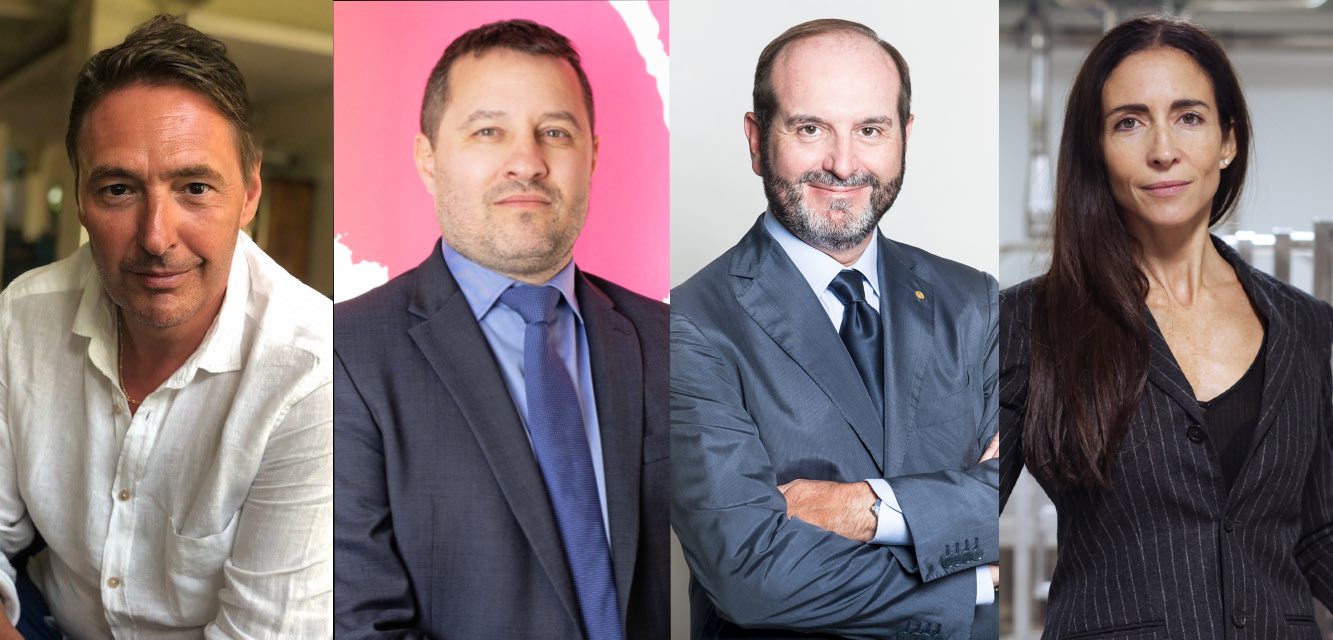
Dida: From left, Roberto Bottino, CEO, Ancorotti Cosmetics; Vittorio Brenna, COO of Intercos; Fabio Franchina, Vice President of Cosmetica Italia and President of Framesi Spa; Ambra Martone, Vice President, ICR – Industrie Cosmetiche Riunite
From bulk to full service: the transformation of the model
It is precisely here that one of the most interesting aspects of the sector’s evolution emerges: the profound change in the business model of Italian manufacturers. For a long time, contract manufacturing was viewed in a simplistic way, almost as an execution function: brands conceived, manufacturers produced. Today, this representation no longer holds. Italian companies in the sector are not mere executors of others’ formulas, nor simple “factories without brands.” On the contrary, over the past twenty years, they have progressively shifted from a logic of bulk production to one of full service, taking on a central role innovation, development, and problem-solving for international clients.
In other words, the manufacturer no longer simply receives a brief to execute quickly and at the lowest possible cost. Increasingly, it is the manufacturer itself that proposes new concepts, new product architectures, new textures, and new combinations of formula and packaging. It manages a growing share of the complexity that brands, on their own, are no longer able or willing to handle internally. As Vittorio Brenna, COO of Intercos, has observed, the decisive shift has been precisely this: from operational supplier to innovation partner. A partner that does not compete with clients on branding, but becomes structurally indispensable thanks to technological depth, development capabilities, and industrial reliability.
This shift is also visible in investment levels. The Italian cosmetics sector allocates around 6% of its revenues to research and development, a share well above the national average. This goes beyond formulation alone. Research encompasses safety, efficacy, stability, compatibility between formula and packaging, the sustainability of ingredients, and the ability to industrialize complex products and replicate them at scale. In some cases, as in the Intercos model, innovation even extends to machinery, processes, and proprietary technologies needed to make new formulations industrially feasible.
A global hub for international brands
This is likely one of the reasons why leading global clients continue to look to Italy as a strategic hub. Not only for product quality, but for the ability to offer complete solutions. The Italian manufacturer is increasingly less a “contractor” in the traditional sense and more a qualified counterpart that supports the brand across the entire value chain: from the initial idea to technical validation, from regulatory compliance to component selection, all the way to production and final assembly. For international brands, global groups, independent labels, and celebrity brands, this means relying on partners capable of reducing timelines, managing complexity, driving innovation, and sustaining the pace of a constantly evolving market.
The case of ICR, as described by Vice-President Ambra Martone, also shows how Made in Italy can be expressed not only as manufacturing excellence but also as the ability to build integrated systems that combine science, creativity, industry, and client relationships. “Our starting point is never just the product, but the ability to accompany the brand throughout the entire process, from creativity to execution, all the way to distribution,” Ambra emphasizes. In this sense, the Italian model stands out for a strong relational component: not simple execution, but long-term partnerships, often built on trust and co-development.
Packaging and sustainability: strategic levers
Within this framework, packaging ceases to be an ancillary element and reveals its full strategic nature. In beauty, packaging is not just image or design: it is a key component of industrial cost, perceived value, product sustainability, and operational feasibility. In many cases, it can account for more than half of the total cost. This is why the presence in Italy of an advanced packaging supply chain, capable of operating at the intersection of aesthetics, engineering, and industrialization, becomes another decisive factor in the system’s overall competitiveness. The strength of Italian beauty lies not only in the formula, but in its ability to integrate different worlds: chemistry, design, manufacturing, service, regulation, and storytelling.
There is also a cultural element worth noting. As Fabio Franchina, Vice President of Cosmetica Italia and President of Framesi Spa, has highlighted, the success of the Italian industry also stems from a specific aptitude for reading change and translating it into solutions. A kind of “solution culture” that Italy knows well in other sectors too, starting with fashion: not abstract creativity, but creativity that responds to concrete needs, interprets social transformations, lifestyles, and new sensibilities, and turns them into products. In this sense, cosmetics is a deeply contemporary sector: it requires the ability to anticipate trends, but also to make them usable, credible, and industrially sustainable.
A less visible, but solid leadership
The result is that the Italian cosmetics industry today occupies a particular position: it does not necessarily dominate through the visibility of final brands, but through control of the capabilities that allow brands to exist, grow, and innovate. It is a less conspicuous form of leadership, but a very solid one. And perhaps this is the most interesting lesson: in a global economy where pressure on costs and volumes favors other countries, Italy manages to remain central when it builds complex, knowledge-intensive systems, where manufacturing still matters, but matters above all because it is accompanied by research, flexibility, speed, and service capability.
In the most recent phase, an even more interesting shift is emerging. Alongside the industrial dimension, some players are exploring new forms of value expression, bringing supply chain expertise into the realm of experience. “With our LabSolue line and the Magna Pars hotel, we wanted to transform fragrance into an experience, not just a product. The idea is that scent can become a language, a way to tell places, moments, identities,” explains Ambra Martone. This is a key transition: from invisible production for major brands to building a direct relationship with the end consumer through spaces, hospitality, and sensory narratives.
Conclusion: where I-Beauty is heading now
Italian cosmetics is much more than a growing industry. It is a demonstration of how Made in Italy can still be competitive when it stops thinking of itself as a simple label of origin and instead expresses itself as an industrial architecture. An architecture made up of SMEs, territories, dense supply chains, sophisticated B2B relationships, constant investment, and an extraordinary ability to turn complexity into competitive advantage.
But today, a new phase is opening. After years in which the system has followed global clients, supporting their development, the question becomes more ambitious: where is the Italian cosmetics industry proactively heading?
The challenge is twofold. On the one hand, to continue sharpening its capabilities to operate in increasingly complex markets, from North America to Asia, where it is not enough to enter, but necessary to deeply understand cultural, regulatory, and economic contexts. On the other, to begin exploring more decisively the B2C space as well, leveraging the country-of-origin effect not only upstream, but across the entire value chain.
In this scenario, “I-Beauty” can become more than the sum of industrial capabilities: it can evolve into a truly recognizable culture, capable of competing, downstream as well, with already established models such as K-Beauty or J-Beauty. Not just well-made products, but an aesthetic, an approach, a vision of beauty that combines creativity, quality, and the ability to interpret change.
If this transition materializes, Italy will no longer be only the invisible laboratory of global cosmetics but will also be able to establish itself as one of its leading storytellers.


