
It is time to regenerate, if we truly want to be sustainable
Andrea Illy, Chairman of illycaffè and co-Chair of the Regenerative Society Foundation, has published “La società rigenerativa – Un nuovo modello di progresso (The Regenerative Society – A New Model of Progress) with EGEA, Bocconi University’s publishing house. SDA Bocconi Insight presents the translation of an excerpt, courtesy of the publisher

Never in human history has so much information been immediately available, and yet a growing and palpable frustration persists. These mountains of data are not being channeled toward a shared project that makes sense. And any shared project, to be realized in concrete terms, necessarily requires common reference values. It is like having all the pieces of a thousand-piece puzzle scattered chaotically across the table, with no one remembering what image they are supposed to form once assembled.
This is where the most important lesson I have learned about transformation during my years of obsessive research on regeneration comes into play. When I began methodically dissecting the great systemic changes in history—from the industrial revolutions that upended Europe to the social transformations that redefined civilizations—I understood one fundamental truth: authentic regeneration can generate a lasting global transformation infinitely greater than anything a single individual could ever hope to achieve, even the most brilliant or determined. To address the most urgent problems of our historical moment, we must develop the capacity to place strategic trust in those closest to specific challenges and, above all, to create narratives so powerful that they can mobilize collective energies that once seemed unthinkable.
Human history is an endless catalog of individuals who have combined visionary imagination and practical determination to dismantle established orders that appeared eternal. […] Narrative change is a formidable engine for transforming hearts and minds, and it is extraordinarily effective in aligning individual actions with collective goals that initially seemed impossible.
[…] Avoiding the collapse of civilization necessarily requires the mindset of medieval cathedral builders. Those architects knew they were laying the foundations for a building that, at best, their grandchildren would see completed. It is a multigenerational project that demands a variety of skills and talents that no single person can possess, and we must work tirelessly toward a world we still cannot fully imagine, knowing that technical solutions will continue to evolve at ever greater speed. Yet there is a dangerous misunderstanding: realistically describing the intrinsic slowness of systemic change is often interpreted as an invitation to resigned acceptance of the status quo. It is exactly the opposite: it is a rational argument for starting as soon as possible, aware that completing this historic task will require sustained and intelligent commitment.
The analogy of medieval cathedrals must not make us forget a fundamental reality of our time: we have already exceeded every deadline scientists set to avoid the worst impacts of climate change and the degradation of natural capital. The paradox is that we must combine a sense of urgency to act immediately with the awareness that transformation will nonetheless require structural time that cannot be compressed.
Three considerations are crucial to navigating this temporal paradox. First: we will not return to the Planet’s safe operating space without a complete shift in model—from extractive to regenerative—that goes far beyond individual technologies or sectors. Second: the mitigation plan for any of the planetary boundaries cannot be fragmented but must be systemic, given their countless interdependencies. Third: all of this will take more time than official targets hope for, because change requires both technologies that must inevitably move along their learning curve and even deeper cultural and institutional transformations.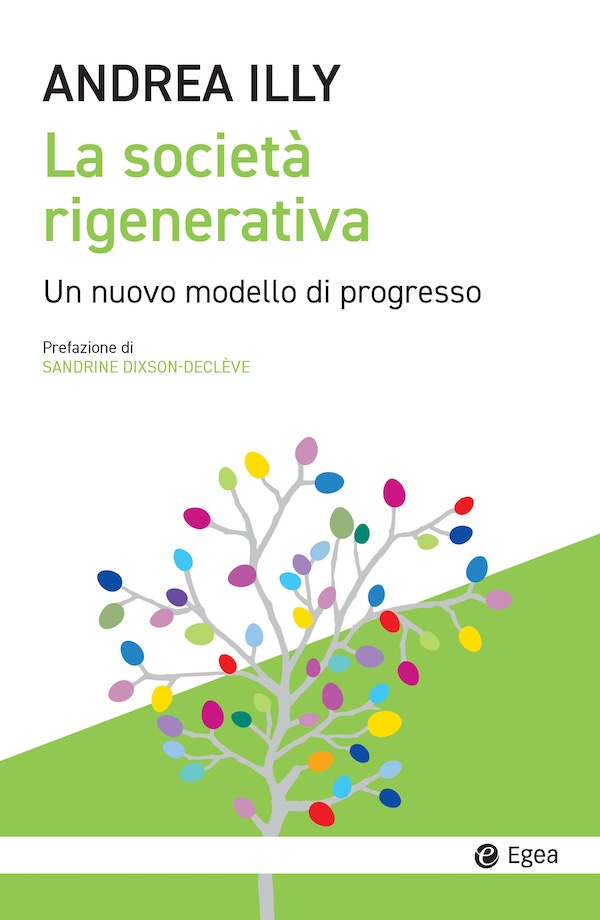 This means we must learn to move with systemic urgency: begin immediately everything we can begin, accelerate everything we can accelerate, but without the illusion that magical shortcuts exist. The challenge is to maintain the intensity of action without falling into paralyzing anxiety or naive optimism.
Capitalism in its current form does more than systematically destroy the natural environment through the unsustainable extraction of resources. It does something even subtler and more dangerous: it psychologically distances us from nature, gradually making us forget what we are losing and why we should care. It is a kind of induced collective amnesia. And here we reach the most troubling core of the contemporary problem: one of the greatest threats to the survival of the human species is the widespread belief that “someone else will take care of it.” Instead, it is we—human beings of flesh and blood, individuals with names and surnames, consumers making daily choices, voters deciding who to send to power, members of communities who can organize—who must necessarily be at the center of this transformation.
The idea that the average individual is completely powerless in the face of multinational corporations and governments is a half-truth, which makes it particularly dangerous. It is true only until a small group of determined people decides to unite around a clear objective. Power is never immobile: it always changes hands, and our society is infinitely more malleable than most of us can imagine. Anthropologist Margaret Mead expressed it perfectly: “Never doubt that a small group of thoughtful, committed citizens can change the world. Indeed, it is the only thing that ever has.”
[…] In the paper I wrote with Paolo Vineis, “No Sustainability Without Regeneration: A Manifesto from an Entrepreneurial Viewpoint,” published in the journal Anthropocene Science, we made a statement that sounds radical but is mathematically obvious: sustainability can be achieved only through the active regeneration of the natural capital we have lost. To be sustainable means to perpetuate the conditions that make life on the planet possible. These conditions are created by ecosystem services—air purification, climate regulation, pollination, the water cycle—that nature provides free of charge by regenerating itself. The corollary is inevitable: without regeneration, there is no sustainability.
It is therefore urgent to measure with precision the planet’s regenerative capacity, which is the difference between what nature produces and what we extract. When this difference becomes negative, we are consuming our future.
At the same time, we must remember that regeneration cannot become yet another miracle solution that allows us to continue living as before. We must envision it as a paradigm shift that requires rethinking everything: how we do business, how we educate our children, how we organize cities, how we behave in our daily lives.
[…] The challenge is primarily cultural. And it begins with the awareness that we are all part of a complex system. Solutions must be complex yet simple to understand. Complication only means that we lack clarity. The ideas, instead, are crystal clear: we must move from a paradigm that sees nature as a resource to be exploited to one that sees humanity as part of a living system to be cared for.
The time is now. As my grandfather understood more than ninety years ago, when you have a dream large enough, revolutions begin with a simple gesture. It is a concrete necessity, as well as a vision. And like all historical necessities, it first seems impossible, then becomes inevitable. Our task is to shorten the time between these two moments. We do not have all the time in the world, but we have all the time we need if we begin today.
From Andrea Illy, La società rigenerativa – Un nuovo modello di progresso, EGEA (in Italian).
Andrea Illy


