
The sustainability of Italy’s National Health Service also depends on businesses. The ENI case

The sustainability of Italy’s National Health Service (SSN) also depends on what happens in the workplace, where health needs and organizational responses intersect and affect people’s lives. This is the perspective presented in Salute, lavoro e comunità (Health, work, and community, in Italian only), by Valeria Tozzi , Guglielmo Pacileo and Antonio Lapenta , published by EGEA. The book traces the healthcare initiatives developed by ENI, the Italian energy giant, since its founding in 1953 and examines their relevance today. 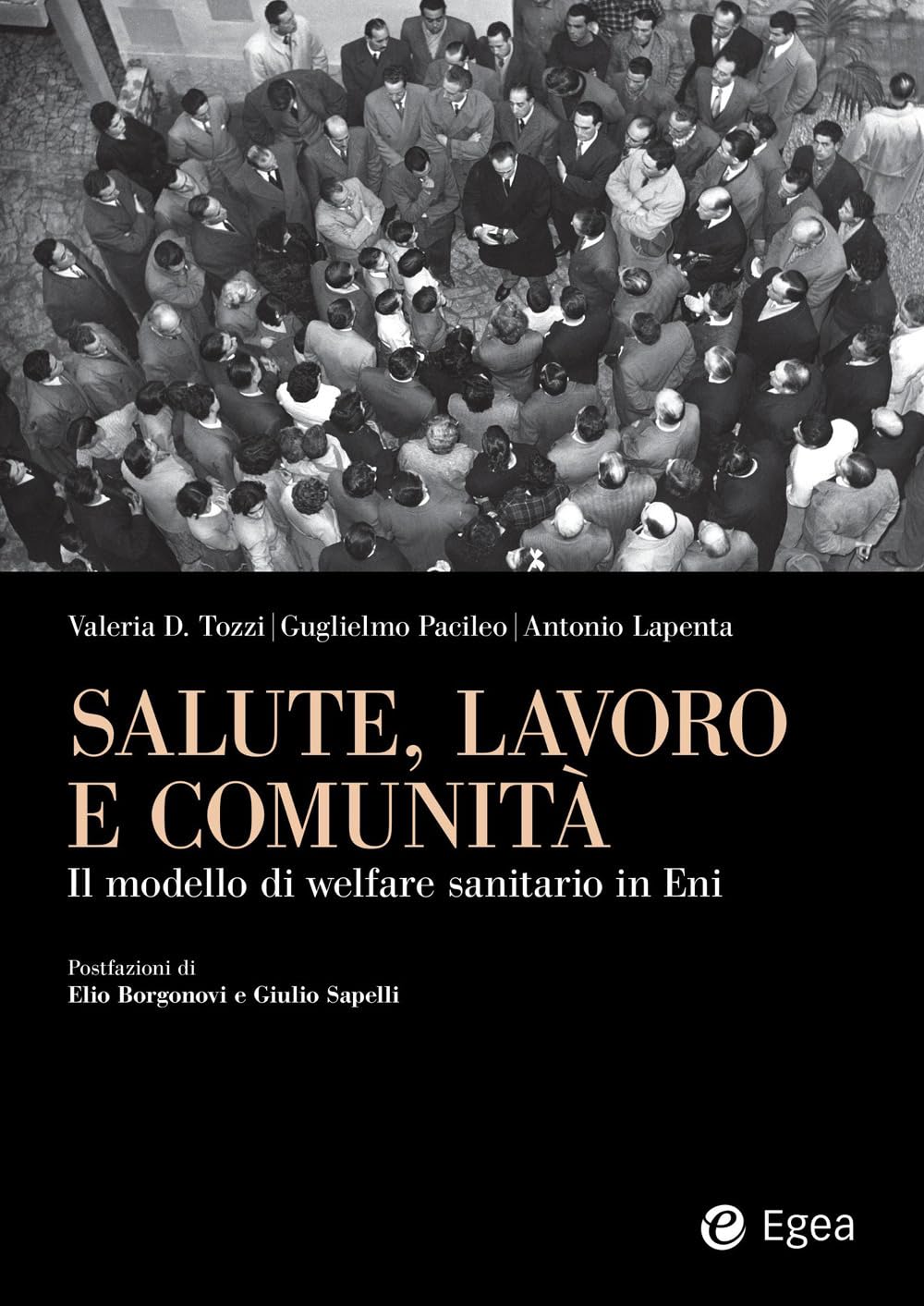 ENI’s origins as a publicly owned company, its role in Italy’s industrialization, its international reach, and the distinctive characteristics of its operations make this experience unique and difficult to replicate. Yet ENI’s story is also about the health of three interconnected beneficiaries: employees, their families, and the local communities where the company operates. Like any corporate welfare initiative, the ENI case reflects specific historical and institutional conditions. Reconstructing these conditions helps us identify issues that are relevant to other organizations as well, beginning with the relationship between corporate interests, individual needs, and collective responsibilities.
Viewed through the experiences of citizens, the Italian healthcare system is already a hybrid one. The same person may turn to public healthcare facilities, receive treatment from private providers on behalf of the SSN, pay directly for healthcare services, or use services offered by their employer. In other words, a single set of health needs can be met through multiple channels, each with different funding, access, and organizational structures. The connections between these channels affect both the patient experience and the use of overall resources.
This transformation toward a multi-channel healthcare system is manifesting through individual choices, collective bargaining, and corporate initiatives. In the current landscape, public debate and the institutional framework have yet to articulate a shared vision. The question of direction is still an open one: which needs are being met, how access opportunities are changing, and what relationships are developing among services. Managing these interdependencies is part of ensuring the sustainability of the SSN.
At this point in history, the relationship between work and health is particularly vital. Chronic illnesses, family caregiving responsibilities, and uncertainty about living conditions all affect participation in the workforce. People bring into their organizations pressures that build up elsewhere in their lives, which overlap with tensions that arise in their professional activities. Workplace communities must find a balance that allows individuals to continue coming to work. Health also depends on the quality of employees’ relationships and the resources they can access thanks to these relationships.
All organizations—public, private and nonprofit—serve as intermediary institutions between individuals and communities. Caring for workplace communities also means reducing preexisting inequalities. Working hours, workloads, and an atmosphere of trust affect the extent to which formal access can translate into a genuine opportunity. What’s more, for a prevention program to be effective, participation must be compatible with work responsibilities and supported by managers. If the corporate culture encourages healthy lifestyles and assists people in finding solutions to their needs, this can contribute to better health.
For businesses, investing in these conditions is a strategic choice. The ability to attract and retain talent (i.e. operational continuity) depends in part on the quality of relationships with employees and the institutional environment. Health also makes development and social cohesion possible in the communities where decisions about consumption, savings, and investment are made. These are some of the conditions that form the foundations of economic prospects for companies.
Corporate healthcare/welfare programs can mobilize resources and expertise, make preventive care more accessible, and identify needs through ongoing relationships. However, the extent of the contribution of such schemes depends on their connections with other services. An initiative may reveal a need, but addressing it requires accessible, coordinated care pathways. Evaluation must therefore include continuity of care and the use of all available resources.
The reality, with regard to corporate healthcare/welfare, is that these opportunities are unevenly distributed. The benefits offered by a large company differ from what smaller organizations can do, and from what people outside the workforce can access. Aligning the development of corporate these programs with the universal principles of the SSN requires a shared institutional framework. By establishing local partnerships and assessing their impact on communities, initiatives that were originally driven by specific interests can take on a broader systemic significance.
It is in this context that corporate healthcare/welfare programs can contribute to public value. Corporate objectives align with the public interest when business decisions expand people’s opportunities for healthy lives and access to care while reinforcing communities’ capacity to respond to their needs. Health is where the interdependence between economic development and collective well-being becomes visible.
ENI’s history provides a case study that prompts reflection on this possibility. Rethinking the sustainability of the SSN means recognizing the resources that already contribute to protecting health and establishing shared guidelines for their use. Public institutions are responsible for focusing different interests and initiatives on the needs that society, over time, has recognized as essential.
- Publisher : EGEA
- Publication date : 2026
- Pages : 208
- ISBN/EAN : 9788823848320
- Format : Print
VALERIA TOZZI is an Associate Professor of Practice in the Government, Health and Not for Profit Division at SDA Bocconi School of Management, where she directs the Executive Master in Management of Healthcare and Social Care Organizations (EMMAS) and the DASP Network.
GUGLIELMO PACILEO is Director of the Clinical Governance, Quality and Research Department at the Alessandria Local Health Authority (ASL) and of the Interorganizational Center for Healthcare Management Studies at the Department of Integrated Research and Innovation Activities (DAIRI).
ANTONIO LAPENTA , who holds a PhD in Healthcare Economics and Management, was a researcher at CERGAS. Since 2008, he has worked in Italian government development cooperation on projects supporting healthcare reforms in Bolivia, Argentina, Peru, and Ecuador.


