
A pharmacy for six generations: why it has to change

From the Silent Generation (those born between 1928 and 1945) to Generation Alpha (from 2013 onward), a pharmacy today serves six different generations at the same time. And it often employs people belonging to four or five of them. This is unprecedented in retail and healthcare services, and it is not just a sociological curiosity: it is a variable that directly affects competitiveness, work organization, and economic performance.
Pharmacy Xchange, the platform for comparison, experimentation, and co-creation designed by SDA Bocconi to foster dialogue among leading companies in the sector and generate tools to support the entire supply chain, has conducted research showing that generational differences are a structural lever separating pharmacies that are able to grow from those destined to lose relevance.
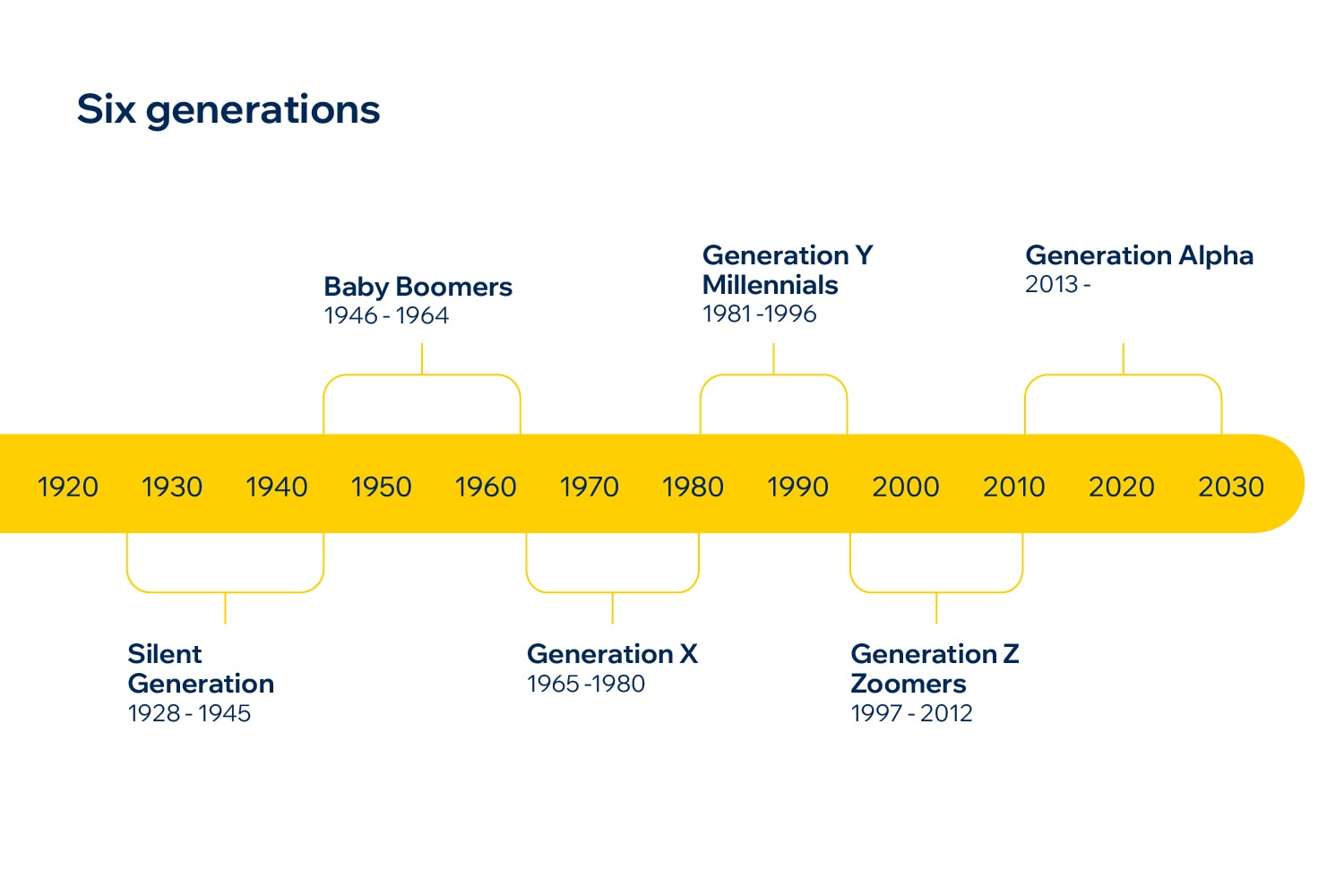
The most striking data concern younger customers. Millennials and Generation Z already account for more than one third of pharmacy visits, a share set to grow, especially in urban contexts. But not all generations want the same pharmacy. And, above all, they do not experience it in the same way. Ignoring these differences means giving up a significant portion of the future market and making the internal organizational model increasingly fragile.
How younger customers think
In recent years, the pharmacy has changed its regulatory perimeter, the services it offers, and its role within the healthcare system, yet it has continued to think as if customers and pharmacists were homogeneous. For a long time, the sector relied on an implicit archetype: an elderly, loyal customer focused on therapy and largely indifferent to the experience; a pharmacist motivated primarily by job stability and the technical dimension of the profession.
That model no longer holds. For younger generations, health is about prevention, well-being, and overall experience; they compare different channels; they assign value to the consistency between what an organization promises and what it actually delivers. On their side, Millennials and Gen Z working in pharmacies struggle to see the context as attractive and capable of valuing their skills. This leads to the research questions:
- How do generational differences influence the relationship between customers and pharmacies?
- How do they affect work organization and pharmacist engagement?
- Is there a measurable relationship between generational management and pharmacy performance?
Reading latent needs
The researchers adopted a mixed-methods approach, combining quantitative and qualitative analyses. On the quantitative side, structured surveys were conducted with 400 pharmacists and 600 customers, using multi-regional samples stratified by age, geographic area, and pharmacy size. Statistical analyses included cluster analysis to identify generational profiles, multivariate regressions, and correlations between perceived experience, trust, and loyalty.
The results confirm the existence of marked differences. Millennials emerge as the generation most distant from the channel: more than 60% do not perceive significant differences between one pharmacy and another, associate the pharmacy almost exclusively with drug dispensing, and tend to trust specialists more than pharmacists.
Generation Z, by contrast, shows higher levels of trust and associates the pharmacy with proximity, accessibility, and practicality. But this trust is conditional: it depends on the coherence between language, values, and the experience actually lived.
The qualitative component of the sudy (in-depth interviews, focus groups, and observation of in-pharmacy behaviors) made it possible to interpret these data. Millennials and Gen Z do not think in terms of products, but of needs and solutions; they expect dialogue, personalization, and physical-digital integration. Pharmacies, therefore, need to learn how to read latent needs.
On the employment side, data on pharmacists under 40 reveal structural criticalities: more than 55% perceive limited growth opportunities, over 60% report organizational rigidity and difficulty balancing work and life. Compensation, however, is not the main source of dissatisfaction. What weighs most are the limited opportunities to use one’s skills, lack of role clarity, and the quality of the relationship with management.
The decisive element is the correlation between organizational models capable of valuing generational differences and concrete results: higher engagement, greater retention, better perceived quality from customers, and a stronger capacity to innovate services and formats.
Diversifying experiences
Managing a pharmacy today means designing complex systems: different experiences for different generations, work models that integrate professionalism and collaboration, organizations capable of making the meaning of the work performed visible.
On the one hand, rather than treating generational differences among customers as a problem, pharmacy managers should “activate” them as a strategic lever of competitiveness.
On the other, the role of the pharmacy as a local point of care also depends on its ability to attract and retain young professionals, by offering evolved work environments consistent with the expectations of new generations.
The research results will be used to refine the materials of the training program Management della farmacia. Governare l’evoluzione del mercato e massimizzare il valore del proprio punto vendita (in Italian).


